Valorant Champions Shanghai, what Group Stage Day 2 revealed about the 2026 title race
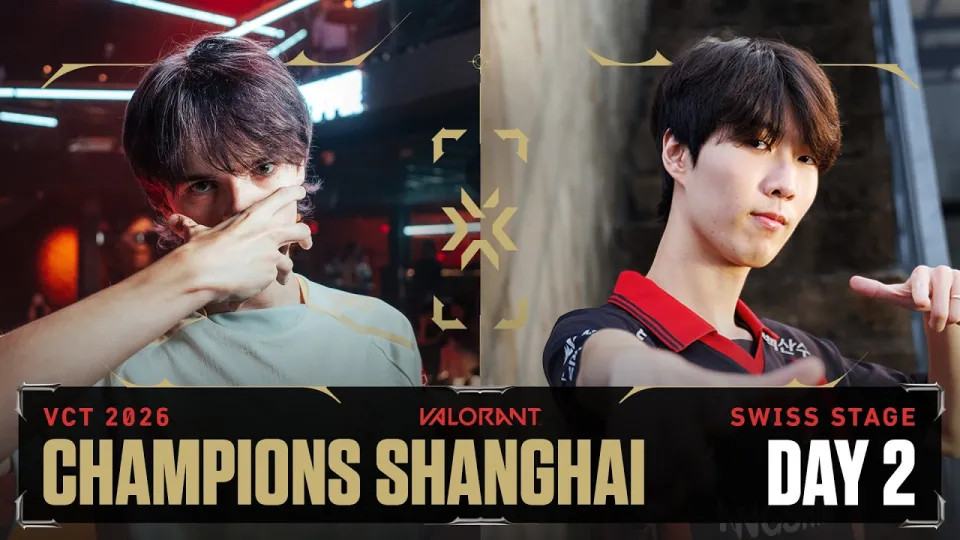
Video: VALORANT Champions Shanghai — Group Stage — Day 2
Want articles like this for your own video to promote it on YouTube and Google? Order them through the Telegram bot @sat_sit_bot. The bot writes and publishes the articles itself (with your YouTube video embedded) on popular topical websites (no ads). Your first 50 articles are free.
· based on the channel VALORANT Champions Tour
Key takeaways
- Valorant Champions Shanghai runs from September 24 to October 18 and crowns the 2026 VALORANT World Champion.
- Sixteen teams qualified from four regions: Americas, CN, EMEA and Pacific.
- Group Stage Day 2 streamed on the VALORANT Champions Tour channel, published September 25.
- The broadcast ran roughly four hours, with the longest single-day block of matches ending near the 4:12:00 mark.
- Fans flagged the day as unusually fast, with several one-sided maps and quick series.
Valorant Champions Shanghai is the 2026 VALORANT World Championship, a 16-team tournament running from September 24 to October 18 where squads from the Americas, CN, EMEA and Pacific regions fight for the year's biggest trophy. Group Stage Day 2, streamed by the VALORANT Champions Tour, condensed a full slate of opening-round series into one long broadcast and set the tone for the rest of the group phase. Official schedules, bracket updates and announcements land first on the VALORANT Esports X account.
What the Shanghai format actually asks of teams
Shanghai uses the standard VALORANT Champions structure: sixteen qualified teams are split into four groups of four, and every group plays a round-robin of best-of-three series. The top two teams in each group advance to the playoff bracket, while the bottom two are eliminated outright — there is no second-chance lower bracket at this stage.
That makes the group phase a math problem as much as a skill test. A single dropped map can decide a tiebreaker, and map differential often matters more than raw series wins. Because Champions invites are earned through regional circuits and Championship Points rather than open qualifiers, every team in Shanghai already survived a full season of VCT competition.
The four regions represented are:
- Americas — North and South American squads plus Brazilian rosters.
- CN — the Chinese league, which receives its own dedicated slots.
- EMEA — Europe, the Middle East and Africa.
- Pacific — Korea, Japan, Southeast Asia, Oceania and South Asia.
How Day 2 played out on the broadcast
The Day 2 VOD runs as one continuous block of group-stage series, with analyst desk segments between maps and translated player interviews after each result. The pacing drew immediate attention: viewers described the day as a speedrun, because several series closed in straight maps with lopsided scorelines rather than the back-and-forth expected at a world championship.
One clip that circulated widely came from the 2:11:00 mark and was labeled gamer rage — a moment of visible frustration from a player during a losing map. Another round near 4:12:00 showed in-game communication from XLG, and viewers argued the calls sounded disorganized compared with what they expect from an international-level roster. Both moments fed a broader conversation about whether the gap between regions is widening or whether Day 2 simply produced a favorable bracket for the favorites.
Regional slots and the CN debate
The loudest argument under the Day 2 VOD was not about a specific round but about tournament structure. A recurring fan position is that China's four slots would be better merged into Pacific, letting the strongest Pacific teams take those spots at international events. Others counter that a dedicated CN league is what built the region's talent pipeline in the first place, and that slot allocation reflects audience size and long-term investment rather than short-term results.
There is a practical reason CN holds its own region: Riot Games operates a separate Chinese server ecosystem and league structure, and the region only entered the international VCT circuit relatively recently. Slot counts at Champions are tied to that competitive ecosystem, not to a single event's results. Historically, though, the criticism resurfaces whenever CN representatives exit early — and Day 2 gave that argument fresh material.
A related thread involved Pick'Ems. Viewers who picked Chinese teams to be eliminated early reported the easiest bracket predictions they had ever submitted, which says less about any individual roster and more about how predictable the group seeding looked on paper.
Skill gaps, mobile, and what the numbers really show
Claims that Day 2 looked like high-ranked players against beginners are an exaggeration, but they point at something real: the spread between the top four or five teams in the world and the rest of the field is wide enough that best-of-three group games can end quickly. At Champions, the difference between a top seed and a fourth seed is usually a handful of clutch rounds and one or two disciplined retakes, not raw aim.
Another recurring fan theory ties CN's international results to VALORANT Mobile, which launched in China ahead of other markets. The logic goes that mobile absorbs a share of the region's competitive talent and audience attention. That is speculation rather than a measured effect — the PC and mobile scenes draw different players, and no official data links the two — but it explains why the conversation keeps returning to regional infrastructure instead of individual matches.
What the broadcast does show concretely is execution speed. Teams that win group games cleanly tend to win the pistol rounds, convert the following bonus, and close maps before opponents can stabilize their economy. On a speedrun day, that pattern repeats across multiple series.
Watching the VOD and following the tournament
The Day 2 broadcast is a single long VOD rather than a set of per-match uploads, so the practical way to watch is by timestamp. Community members maintain spoiler-free timestamp lists in the comments so viewers can jump to a specific series without seeing the result first — a system that works well for a four-hour block.
For live coverage, the official channels are the fastest route:
- VALORANT Esports on X for schedules, results and announcements
- TikTok
- Twitch for live matches
One production note viewers raise every year: post-match interviews are translated on stream, and the interpretation can take noticeably longer than the original answer. It is a minor annoyance during a long broadcast day, but it adds up across a full group stage.
What Day 2 means for the rest of the group stage
Day 2 did not decide the tournament, but it clarified the shape of it. Teams that dropped maps early now face must-win series with almost no margin, while the favorites banked map differential that could matter in three-way ties. The remaining group days will determine which two teams per group reach the playoff bracket and which ten go home before the bracket even starts.
Expect the CN slot debate to continue regardless of results, because it is a structural argument rather than a match-specific one. Expect the speedrun complaints to fade if the later group days produce closer series — and to return loudly if they do not. Either way, the group stage is where Champions separates teams that can adapt between maps from teams that only have one prepared answer.
Conclusion
Group Stage Day 2 of VALORANT Champions Shanghai compressed a full slate of best-of-three series into one long broadcast, and the results were decisive enough to start arguments about regional slots, competitive depth and tournament format. The 16-team field from the Americas, CN, EMEA and Pacific is now locked into round-robin play, with only the top two per group surviving to the playoffs. Day 2 favored the favorites, but the map differential banked here will shape every tiebreaker that follows. For schedules, bracket updates and official announcements, follow the VALORANT Esports X account, and watch the full Group Stage Day 2 VOD on the VALORANT Champions Tour channel, which produced this broadcast and the rest of the Shanghai coverage.
Source: VALORANT Champions Shanghai — Group Stage — Day 2 · Markdown version
Questions & answers
How does the VALORANT Champions Shanghai group stage work?
Sixteen teams are divided into four groups of four and play best-of-three round-robin series. The top two teams in each group advance to the playoff bracket, while the bottom two are eliminated with no second chance. Map differential can decide ties, so dropped maps matter even in series a team wins.
Why does China have its own region and four slots at Champions?
China runs a separate league and server ecosystem under Riot Games, and its slot allocation reflects that infrastructure plus the size of its audience rather than a single event's results. Fans regularly argue those slots should be merged into Pacific, but the allocation is tied to the competitive ecosystem, not to one group stage.
Was Group Stage Day 2 really as one-sided as viewers said?
Several series closed in straight maps with lopsided scorelines, which is why the day got labeled a speedrun. That reflects a real gap between the top seeds and the rest of the field at best-of-three level, though the difference usually comes down to pistol rounds, economy conversion and retakes rather than raw mechanics.
What is the best way to watch the Day 2 VOD without spoilers?
The broadcast is one continuous block rather than separate match uploads, so the community maintains timestamp lists in the comments that let you jump straight to a series. Use those timestamps, then check the official VALORANT Esports channels for schedules, results and bracket updates.